The Forest Service Didn't Fail Us - The Environmental Industry Captured It
By: Frank Carroll
Date: June 2026
Source: https://www.nwasolution.org
The hand-wringing over the Interior Department's decision to sever 43 partnerships and reclaim roughly $4 million from groups working in "direct opposition" to its mission deserves a blunt response: this was not an attack on conservation. It was a long-overdue audit of an industry that has spent decades mining the federal government for billions while leaving our forests to burn.
Let us reject, point by point, the comfortable narrative that casts these groups as selfless stewards.
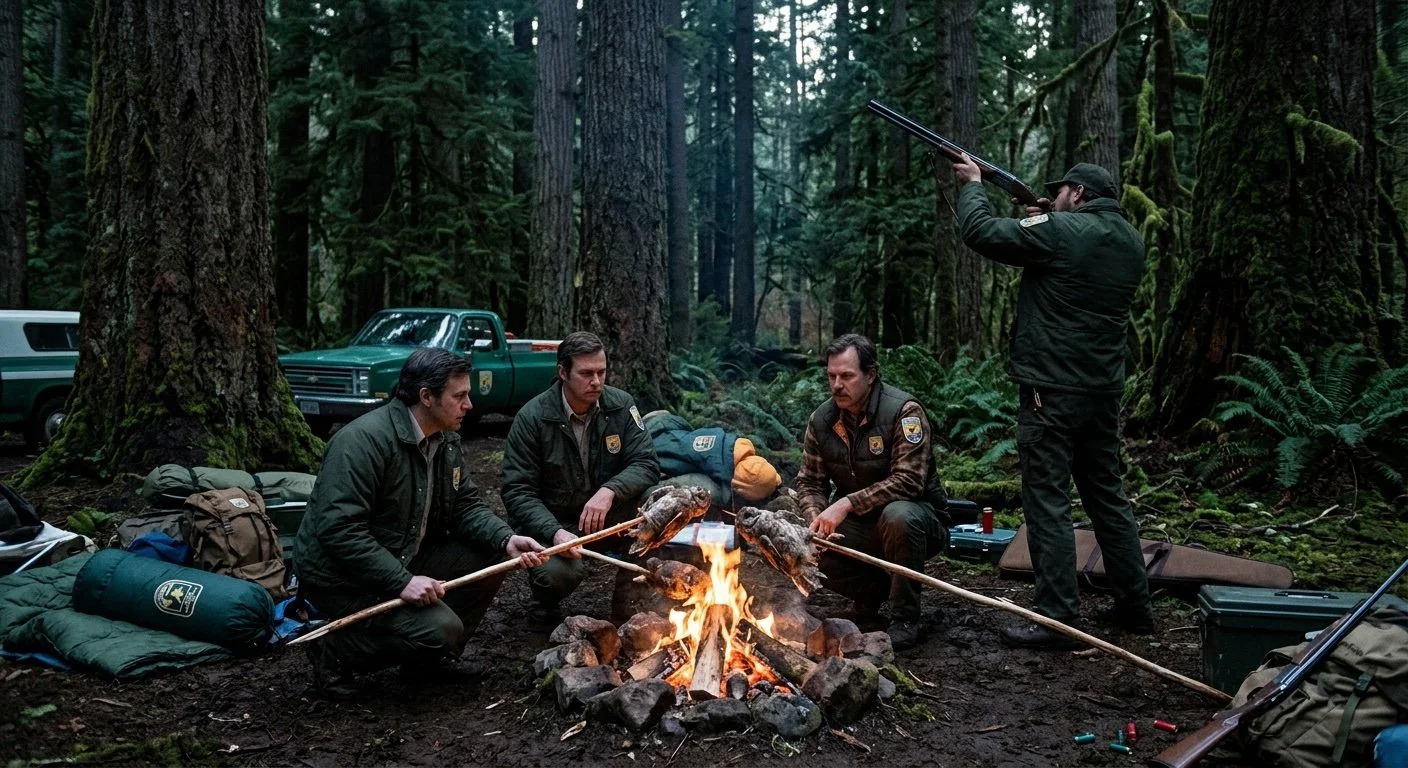
“Tastes like chicken!” Original Nano Banana 2 illustration by Frank Carroll.
Begin with the premise that organizations like Patagonia and the Wilderness Society are grassroots defenders of the wild. They are not. They are industrial-scale operations with corporate revenues, professional litigation arms, and a financial interest in perpetual conflict. Every lawsuit, every injunction, every "study" funded by appropriated dollars feeds an ecosystem of activism that profits from paralysis. They do not live in the forests. They visit them, photograph them, and then return to offices to draft the briefs that lock working communities out of the lands their families managed for generations.
The consequence of that capture is the quiet death of the multiple-use mandate. The Forest Service was created to manage National Forests for timber, grazing, recreation, watershed, and wildlife — a balance, not a museum. Under sustained activist pressure, the agency abandoned that charter and adopted a Park Service–style preservation model wholly unsuited to lands that were always meant to be worked. The foresters were let go. The lawyers moved in. A train built for productive management was forced onto a dirt road, and we are all living with the wreckage.
Now consider the claim presented as gospel: that a century of fire suppression is the settled cause of today's catastrophic wildfires. It is not settled. It is convenient. Suppression is part of the story, but the far more damning correlation is the collapse of active management. When logging and thinning ended, fuel loads exploded. The roads that once gave firefighters access fell into disrepair. The woods workers — men and women who knew every drainage and every ridge, who fought fire as expertly as they harvested timber — were driven out of the woods.
Active management once paid for itself, funded road maintenance, and put skilled hands on the ground. The activists ended all of it, then blamed the smoke on everyone but themselves.
The spotted owl remains the emblem of this myopia. In the name of a single species, several million acres of old-growth forest were placed off-limits to management — and then doomed to burn in the very fires that management could have prevented. The owl was not saved. Its habitat was incinerated. And when the barred owl moved in and outcompeted the favored species, the same movement that opposes harvesting a single tree endorsed the slaughter of some 450,000 barred owls. There is no kinder word for a program of shooting one owl species to protect another: it is wildlife ethnic cleansing, dressed in the language of science.
This is the recurring pattern. The Green solution is never a solution. It is always a myopic, single-species fixation that ignores the forest as a living, working whole. The activists embraced climate change as a universal explanation precisely because it absolves them of responsibility for the management decisions they imposed. Blame the atmosphere, and you need never answer for the unthinned stands, the gated roads, and the unemployed foresters.
In trading its mission for the activist model, the Forest Service lost something it cannot litigate back: the support of the rural communities it was meant to serve. It surrendered its social license to operate. An agency that no longer answers to the people who live in and around the forests is an agency no longer capable of fulfilling its own founding purpose.
The Forest Service may be on fire. But if it is, it was the environmental activist industry that lit the flames and then sold the nation a story about who struck the match.
The decision to cut these partnerships is not the abandonment of conservation. It is the first decisive step toward restoring it. We look forward to a reinvented Forest Service — one that fires the briefcases, rehires the foresters, reopens the roads, and embraces, at long last, the original mission it was never meant to forget.