The 2013 Pearce Wildfire Report: Current Update
By: William Derr
Date: July 2026
Source: https://www.nwasolution.org
2013 .pdf Report: July-Derr-Pearce.pdf
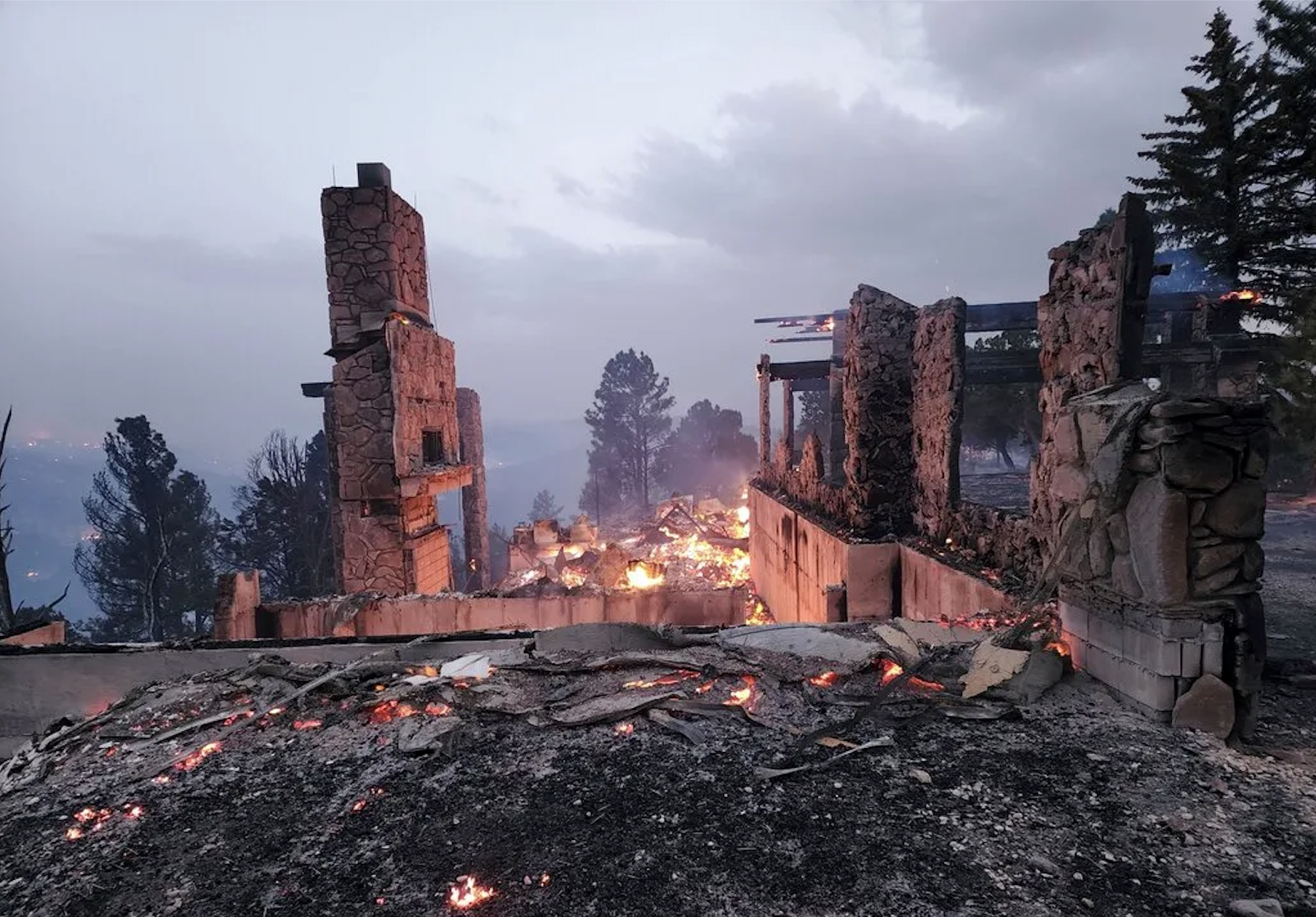
The remains of a home left after a wildfire spread through the Village of Ruidoso, New Mexico, on Wednesday, April 13, 2022. Photo by Alexander Meditz via Associated Press)
Steve Pearce became the new Director of the USDI Bureau of Land Management (BLM) in May. His selection was controversial, with ranching and agricultural organizations (and Republicans) in full support, and environmental organizations such as the Sierra Club and Wilderness Society (and Democrats) strongly opposed. Much of the controversy was based on his past support of privatizing certain federal lands in western States.
The history of myself and NWA with Director Pearce is interesting and goes back to 2012, when he was a Congressman from New Mexico. That year New Mexico had experienced the two worst catastrophic wildfires in its history: the Whitewater-Baldy Complex, which started May 9, reached 298,000 acres in size and cost $100 million to extinguish; and the Little Bear Fire, which began June 4, burned 44,000 acres, destroyed more than 240 homes in Ruidoso -- a town of less than 8,000 -- and also cost $100 million to extinguish. Both fires were out by July 31, following seasonal thunderstorms and heavy rains that month.
These were record wildfires for New Mexico at that time and Congressman Pearce requested the National Institute for the Elimination of Catastrophic Wildfires to issue a report on the fires with recommendations. As many of you know, that was the original name for this organization when founded by Bruce Courtwright about 2010, before being renamed, with incorporation, as National Wildfire Institute (NWI) in 2016, and then again as NWA when we registered as a 501 c(3) educational nonprofit last year, in early 2025.
I was appointed as a "Legislative Fellow" to Pearce and assigned to research and write the requested 7-page report (below). The seven attachments included one titled "The Full Cost of New Mexico Wildfires Report," which is consistent with the theme of this Newsletter.
Pearce's office sent out a press release -- titled in caps -- from Ruidoso in early April after reviewing the report:
PEARCE RELEASES FIRE REPORT
Ruidoso, NM (April 2, 2013) – Today, U.S. Congressman Steve Pearce released a report he requested last summer on recent fires in New Mexico.
“Today’s report is a step toward the transparent, locally-driven approach to forest management that New Mexico needs,” said Pearce. “New Mexicans have expressed anger and frustration over the handling of recent fires, which needlessly cost hundreds of millions of dollars, destroyed hundreds of thousands of acres of habitat, and killed countless plants and animals. By understanding thoroughly what has gone wrong with fire management in past summers, we can work to improve our fire prevention and forestry policies, starting now.”
The report was sponsored by the National Institute for the Elimination of Catastrophic Wildfire, and authored by Bill Derr, who retired as special agent in charge of the California Region for the US Forest Service. The report, which was completed at no cost to taxpayers, details what went wrong with the suppression efforts of the Whitewater-Baldy Complex and Little Bear Fires last summer. It recommends that the Forest Service manage our nation’s forests in accordance with the Organic Act of 1897, review the National Fire Policy, calculate the total cost of wildfires beyond suppression, and that Congress should reform the Equal Access to Justice Act to prevent special interest groups from dictating forestry policy in an unscientific manner at taxpayer expense.
*******************
A reading of the report clearly identifies the four basic NWA principles that have been refined and remain consistent from these beginning actions and concerns: 1) restore the 10 AM policy; 2) stop "let burn" fire options; 3) treat wildfire fuels; and 4) restore and actively manage our public forests for future generations.
Unfortunately none of the report's eight recommendations for corrective actions were adopted in subsequent years; wildfires continue to escape due to lack of immediate direct attack designed to suppress the fire by 10 AM on the day following discovery or subsequent days with additional resources.
Other points made in the report:
"Allowing some wildfires to burn, failure to remove hazardous fuels, & lack of active forest management are major contributors to the escape of wildfires."
"If a more aggressive National Fire Policy had been in place with enhanced firefighting resources and if hazardous fuel conditions had been mitigated through sound forest management practices, these wildfires could have been more easily contained and controlled. Appeals and court actions and a protectionist rather than a multiple use policy by the Administration were additional constraints."
"Billions of dollars have been spent on fire suppression and related damage costs on these major fires which could have been saved had greater investments been made in pre-suppression measures including the reduction of hazardous fuel accumulations and more aggressive fire suppression tactics."
"The Forest Service has been significantly curtailed in its efforts to carry out its original mandate from Congress and subsequent related legislation by a variety of special interest environmental groups who continually challenge sound forest management practices by appeals and court action. The Equal Access to Justice Act has facilitated this effort by providing taxpayers dollars to some of these groups wherein the primary beneficiaries are the attorneys who bring actions against the Forest Service.
*************
Prior to describing the eight Recommendations, the 2013 report focused on the "ambiguous National Fire Policy" that the four "following elements endorsed by the Forest Service" as having a "profound influence in contributing to the increase in major wildfires":
(1) The elimination of the time-honored 10 AM Control Policy dating back to 1935 which established the objective of planning and providing the necessary resources to control a wildfire by 10 AM the following day.
(2) The introduction of the practice of reintroducing fire on the landscape to accomplish management objectives by allowing unplanned fires to burn has often resulted in escapes and more significantly created a belief by many Forest Service managers that fire is a positive change agent on the landscape thereby reducing their sense of urgency to control a wildfire during fire season when the risk of escape is greatest.
(3) Not assigning firefighters to fires at night due to safety concerns when containment and control opportunities are often the most effective and firefighter safety concerns can be appropriately addressed.
(4) The use of "burn out" firefighting tactics in lieu of direct fireline construction adds total burned acres and often escapes planned perimeters thereby further increasing total burned acreage by 100 percent. This tactic creates serious pulmonary damage and related health costs to local residents.
***************
Here is the report. The sum total of the two 2012 $100 million New Mexico fires is that nothing has been learned to the degree needed to end these fires and rejuvenate the burned lands. Our grandchildren deserve better.
Download report: July-Derr-Pearce.pdf