Another Year Of Deadly Wildfire Smoke?
By David L. Auchterlonie, Author- Running Out of Time: Wildfires and Our Imperiled Forests
April 4, 2026
Source:
Download .pdf
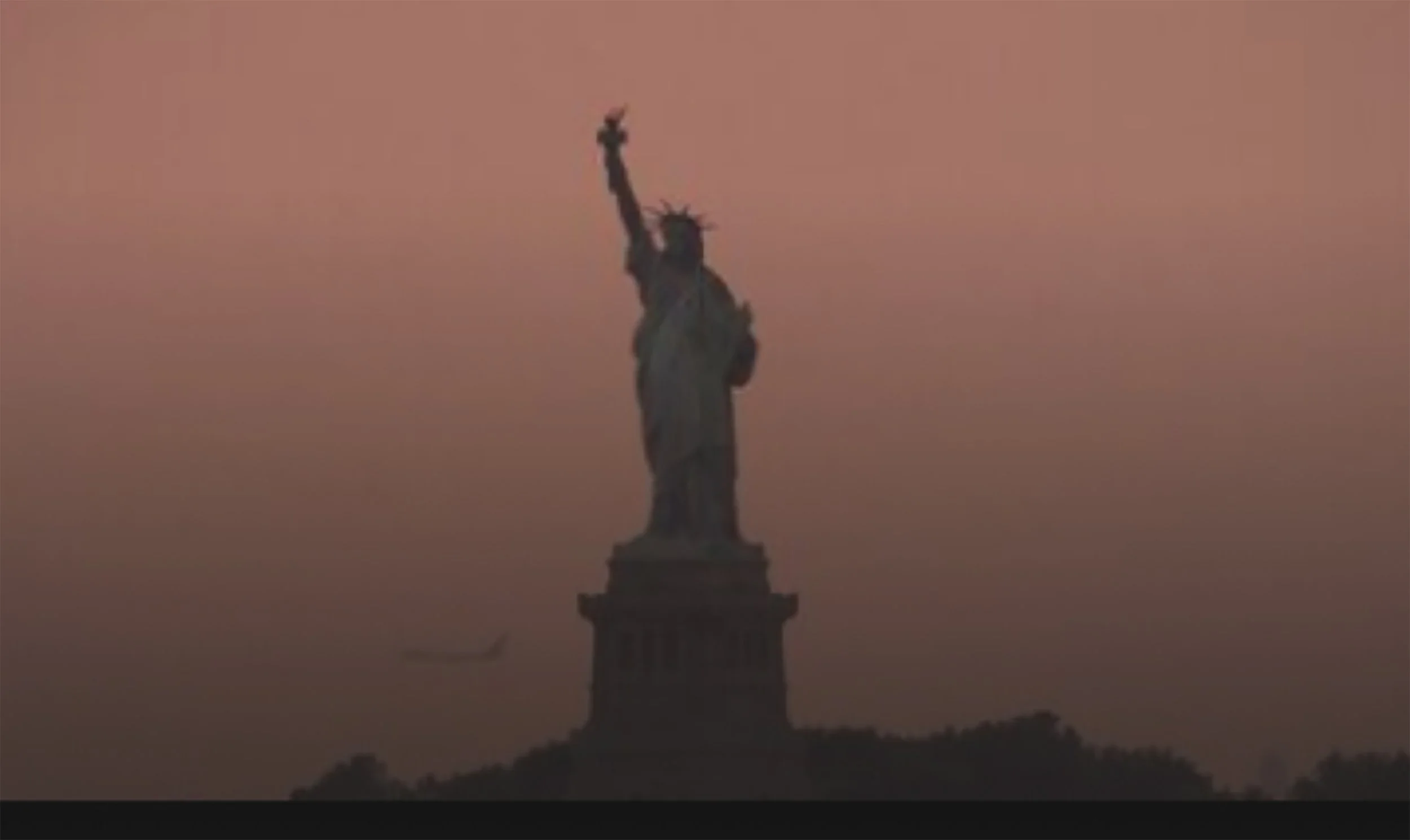
How many scientific studies are needed? The World Health Organization, the Copernicus Atmosphere Monitoring Service (CAMS), the National Academy of Sciences, Environmental Science & Technology, the UCLA study of autism, Mount Sinai-New York, and the Lancet have each published their professional, peer-reviewed conclusions: wildfire smoke is carcinogenic.
As these studies report, wildfire smoke can aggravate cardiac and pulmonary function. We know bronchitis, COPD, cardiovascular disease, and even autism in children have been linked to wildfire smoke inhalation. The small particulate matter called PM 2.5, along with other noxious chemicals such as carbon dioxide, methane, acetone, and nitrogen oxides, can enter our bloodstream, posing significant, even life-threatening health risks. One study concludes that almost 25,000 deaths per year can be attributed to wildfire smoke PM 2.5 in the United States alone.
However, this is also a global challenge – not only from localized wildfire incidents in Western states but also from wildfires thousands of miles away. For example, smoke entering the atmosphere over Alaska has impacted population centers in Houston, Texas. As the photos above show, wildfires in Canada in 2023 and 2025 produced significant amounts of smoke pollution in Washington, DC, and New York City. Even European cities experience wildfire smoke pollution from U.S. and Canadian ignitions.
A summary of conclusions from scientific studies will help drive home the health risks caused by wildfire smoke. Here is just a sample of several important studies:
Mortality Risk
“We investigated the association between long-term exposure to wildland fire smoke PM2.5 and nonaccidental mortality and mortality from a wide range of specific causes in all 3,108 counties in the contiguous United States, 2007 to 2020……. Cardiovascular, ischemic heart disease, digestive, endocrine, diabetes, mental, and chronic kidney disease mortality were all found to be associated with long-term wildland fire smoke PM2.5 exposure. Smoke PM2.5 contributed to approximately 11,415 nonaccidental deaths/y (95% CI: 6,754, 16,075) in the contiguous United States. Higher smoke PM2.5-related increases in mortality rates were found for people aged 65 and above. Positive interaction effects with extreme heat were also observed. Our study identified the detrimental effects of long-term exposure to wildland fire smoke PM2.5 on a wide range of mortality outcomes, underscoring the need for public health actions and communications that span the health risks of both short- and long-term exposure.”
Source: PNAS, September 24, 2024 –"Long-term exposure to wildland fire smoke PM2.5 and mortality in the contiguous United States.”
* * * *
“We found that wildfire smoke PM2.5 was associated with increased mortality rate for all studied outcomes, except for deaths from transport accidents or falls, which served as negative outcome controls. Wildfire smoke PM2.5 was responsible for ~24,100 all-cause deaths per year in the contiguous United States.”
Source: Science Advances- February 4, 2026. “Wildfire smoke PM2.5 and mortality rate in the contiguous United States.”
* * * *
“Our principal estimate for the average mortality attributable to landscape fire-sourced (LFS) exposure was 339,000 deaths annually. In sensitivity analyses, the interquartile range of all tested estimates was 260,000-600,000. The regions most affected were sub-Saharan Africa (157,000) and Southeast Asia (110,000). Estimated annual mortality during La Niña was 262,000, compared with 532,000 during El Niño.
Fire emissions are an important contributor to global mortality. Adverse health outcomes associated with LFS could be substantially reduced by curtailing the burning of tropical rainforests, which rarely burn naturally. The large, estimated influence of El Niño suggests a relationship between climate and the burden of mortality attributable to LFS.”
Source:National Institute of Health, May 2012- “Estimated global mortality attributable to smoke from landscape fires.”
* * * *
“We calculated country-specific population-weighted average daily and annual landscape fire-sourced (LFS) fine particulate matter (PM2·5) and surface ozone (O3) during 2000–19 from a validated dataset. We obtained the relative risks (RRs) for both short-term and long-term impact of LFS PM2·5 and O3 on all-cause, cardiovascular, and respiratory mortality. The short-term RRs were pooled from community-specific standard time-series regressions in 2267 communities across 59 countries or territories. The long-term RRs were obtained from published meta-analyses of cohort studies on all-source PM2·5 and O3. Annual mortality, population, and socio-demographic data for each country or territory were extracted from the Global Burden of Diseases Study 2019. These data were used to estimate country-specific annual deaths attributable to LFS air pollution using standard algorithms.
Globally, 1·53 million all-cause deaths per year…. (95% empirical confidence interval) were attributable to LFS air pollution during 2000–19, including…. LFS PM2·5 to 77·6% (author’s note-i.e., 1.19 million) …. of the total attributable deaths….”
Source: The Lancet-Volume 404, Issue 10470, p2447-2459, December 14, 2024, “Global, regional, and national mortality burden attributable to air pollution from landscape fires: a health impact assessment study.”
Wildfire smoke increasingly impacts our daily lives. School, work, recreational, and National Park closures are now normal occurrences. Coughs, eye irritation, and disruption of routine are reminders that our forests are burning. With severe damage to the environment and economic well-being.
Independent studies report that approximately 10% of all greenhouse gases (GHGs), or almost two billion metric tons of carbon, are released into the atmosphere each year. This figure is expected to increase each year as wildfire incidents become more intense and seasons last longer. Not only is our health affected, but carbon-sequestering stores are severely damaged as well.
Moreover, insurance losses from global wildfire incidents totaled over $100 billion in 2025, according to reinsurance firm Swiss Re. Their report highlights the economic reality that insurance markets cannot sustain losses at these levels. As a result, many homeowners cannot afford or even secure homeowners' fire insurance, particularly in high-risk fire map areas.
We are close to a tipping point. National policy must return to a sound forest stewardship policy that first puts out all wildfire incidents immediately while simultaneously tending to our forests as stewards through salvage recovery, forest thinning, responsible and sustainable timber logging, forest floor clearing, removal of insect-infested tree stands, and active watershed management.
As we approach another wildfire season, the National Wildfire Alliance (NWA) continues to strongly advocate for National and state-driven policy changes to address this forest management and public health crisis.