“Yes, the Gap Can Be Bridged"...USFS Chief, Tom Schultz
“Wildfire has become the magnet among those who share our concern for the damage stand-replacing fires have done on public and private forestland over the last 25 years.” Tom Schultz, 21st Chief of the U.S. Forest Service
By Jim Peterson
Date: February 9, 2026
Source: https://evergreenmagazine.com
Publication .pdf
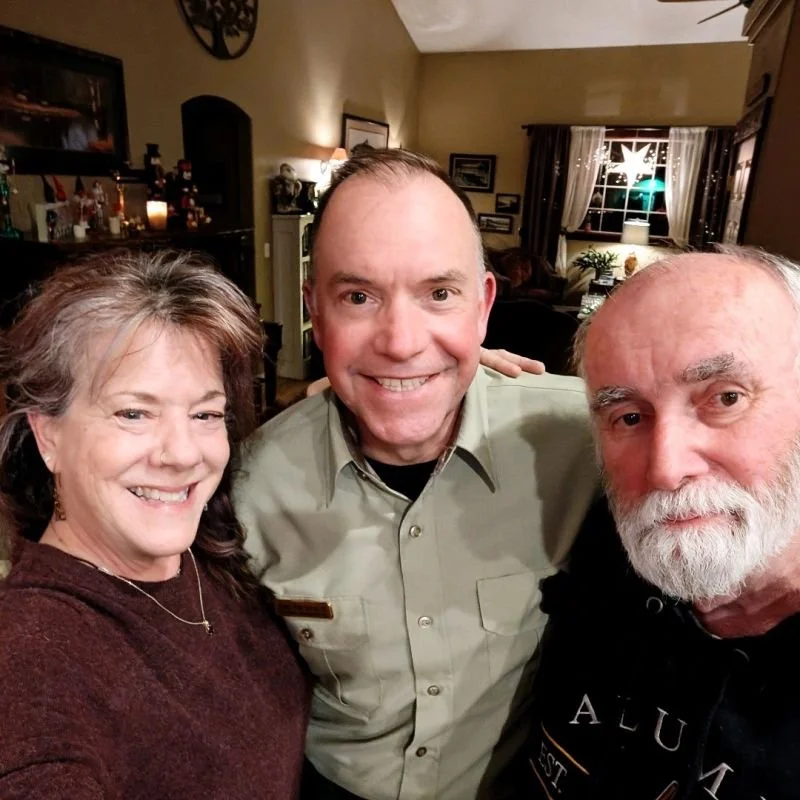
Julia Petersen, Tom Schultz, Jim Petersen.
Dalton Gardens, Idaho. Feb 6, 2026.
Evergreen: Chief, tell us about your upbringing and how it led you to Washington, D.C.
Schultz: I grew up roaming the woods along the Occoquan River - about 20 miles south of D.C. Our family did lots of camping and fishing when I was young. It sparked my early interest in forestry. My grandfather was an avid birder and early Scout leader, and my father-in-law was a professor at Montana State University and an avid sportsman who spent 30 years living and working in Gallatin County, Montana.
Evergreen: You grew up very close to forestry’s beginnings in America.
Schultz: I did, for sure. Many westerners don’t know that the history of forestry and sawmilling in this country began on the Atlantic seaboard. There are many parks and museums here, including one in (including in Occoquan, VA, marking early sawmills that produced lumber, roof shakes, and siding for some of the earliest communities in Pennsylvania, New York, New Jersey, Maryland, and Virginia — including Colonial Williamsburg, which served as the capital of the Virginia Colony from 1699 to 1780.
Evergreen: We’ve toured Williamsburg twice. The restoration work funded by the Rockefeller Foundation is very impressive.
From State Leadership to Chief of the Forest Service
Evergreen: Who first contacted you about the Chief’s job?
Schultz: Jim Hubbard, when he was Agriculture’s Undersecretary of Natural Resources and Environment. He didn’t know what might be available, but he wanted me to think about what might interest me. He knew I had both western and southern experience, which was a plus.
Evergreen: We’ve visited with Jim at a couple of forestry conferences in Idaho. He held several federal forestry positions before retiring, including one at the Department of the Interior. Wildfire always seemed to be on his to-do list. Nice man. Very capable.
So here you are — Chief of the Forest Service at a precarious time. Americans are deeply divided over how National Forests should be managed, or whether they should be left to nature’s vagaries.
Is this gap bridgeable?
Can the Divide Be Bridged?
Schultz: My mind goes back to Jack Ward Thomas’s often-quoted comment about environmentalists going around the battlefield bayoneting the wounded and the dead. Yes, the gap can be bridged. Wildfire has become the magnet among those who share our concern for the damage stand-replacing fires have done on public and private forestland over the last 25 years.
Evergreen: We agree. How did you come to that conclusion?
Schultz: I’m living out of a suitcase now, traveling from coast to coast and meeting with Forest Service employees, community leaders, elected officials, conservationists, and industry groups. Most people want to tell me a personal story about how one of these fires destroyed their community, a watershed, or a place where they took their kids camping or fishing.
Listening Before Leading
Evergreen: That must be exhausting. What do you tell them?
Schultz: I’ve long believed we have two ears and one mouth because we’re supposed to listen before we talk. So I’m doing a lot of listening before I say anything.
Evergreen: And when you do respond — what do you tell people?
Schultz: I tell them adaptive forest management is the answer. We have to address the underlying causes of these fires. Our safest and most reliable tools for reducing wildfire risk are harvesting overstocked forests, salvaging dead timber as quickly as possible, and prescribed burning of the debris left behind in diseased and burned forests.