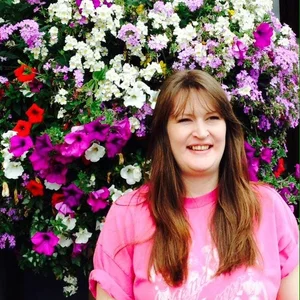
Spotted Owls, Clinton Plan and Deadly Smoke: One Woman's 30-Year Fight for Forest Communities and Clean Air
By Nadine Bailey
November 20 & 25, 2024
Transcript .pdf
Part 1: 1994 Clinton Forest Plan and Subsequent Wildfires and Deadly Smoke
I was a part of the effort to make President Clinton understand the importance of forestry communities.
In 1983 [1993], I was a guest on the at the President's forest summit in Portland, mainly because my daughter had been on a TV program with him and told him about what would happen if he didn't manage the forest, and he said: "Don't worry. You know I'm going to have a conference, and I'll get everybody together, and we'll solve the problem."
So early this spring it was the 30-year anniversary of the Northwest Forest Plan, so I applied for my three minutes to speak, and drove up to Weaverville. And I got there, and the meeting was being held in the new facility, medical facility, and on the whole wall was this giant digital screen, and on the screen was this beautiful green forest. It was the whole wall, and it was green. It was obviously taken somewhere in Washington in the temperate forest.
And as I stood up, I said: "You know, three minutes, that's a that's a minute per decade of my life that I've spent trying to get the message across to people that if we don't manage our forests we are going to lose them."
And I said: "I'm really surprised at this picture on the wall, because the professor that was on the committee had said that every year to her class, she reads the speech that Bill Clinton gave at that Northwest Forest Conference as something to aspire to."
And I told them: "Why would you aspire to a plan that was an abject failure. We burnt up the very habitat that we were saving from the loggers. I mean, really, people come on, look at this. I mean, you look at the territories that have burnt and the owl circles, and they're gone. So what was the goal? We were saving the forest from the loggers -- remember that, people?"
And so my three minutes was up. And when I got out to the car, I had a text from the local -- my local -- nemesis in Trinity County, Larry Glass, who probably filed more lawsuits to stop logging than anybody, and he said: "Nadine, thank you for being one of the few people to stand up and speak out for the forest."
So that's how far this debate has come. The very people that were, wanted . . . good forest management and not large-scale clearcuts, are now aghast. And: "what's going on?" Thousands and thousands of acres burnt to the ground.
So last, two weeks ago, I drove to Graeagle [California]. So I live in Anderson, and I drove down to Red Bluff and drove up Highway 36, so I crossed the footprint of the [2024] Park Fire. I haven't had time to look at it much, but if you get out a map that was the largest fire in the history of California, and it defied all fire models. It moved fast, it burnt hot.
It was . . . it was a fire that most people -- you weren't going to mess around and try to stop it because it was moving. It was dangerous, and it was going . . . it was burning over places that hadn't been managed or touched in . . . well, since the spotted owl. So, it a lot of fuel, a lot of damage, a lot of energy, and it was headed towards Shasta County, and I live near the end of the airport in Redding, and I've never seen an assault on a fire like that. Every 15 minutes it was a turnaround with a borate [fire retardant] plane.
They poured more borate on the Park Fire, trying to get it stopped, because I think they know what Royal [Burnette] and Roger [Jaegel] and I have been trying to tell people for the last five years -- that we're due for a fire that's going to start in the south, and it's going to go all the way to Canada. And the Park Fire had that potential, but they got it stopped with more fire suppression than I've ever seen in my life.
It was . . . it was heroic, and they got it stopped before it got into the [National Lassen Volcanic] Park, where there is the leftover [2021] Dixie Fire material. So if it had gotten into that there would have been no stopping it at all.
So anyway, I drove through the Park Fire. I drove up [2021] Dixie, you get -- and if you want to go on my Facebook page -- you can see a picture of me standing there, talking about the available fuel that is sitting in the Dixie footprint right now, ready to burn again.
I drove through Graeagle. I drove down to Indian . . . I drove, stopped at Indian Falls, walked down, and the Fire had come down into there, and there was a big burned-out oak. And I took some pictures of that and talked about the impact of the Dixie on the Feather River watershed.
There are pictures in that watershed where there are three feet of sediment over the tops of roads. and that's the issue that no one is talking about. We're not talking about the impact of fisheries, and that's what I do know. I work for Family Water Alliance, and we run the Sacramento Valley fish screen program. So we are trying to save fish. At the same time I'm walking, watching this destruction in the upper watersheds because we're not managing those lands.
So I drive through Greenville. I was dropping my daughter off. I dropped her off and started back, and I got on the phone with a friend of mine, and I said: "I'm driving through Greenville. It's breaking my heart. I had to call you," and he said: "Yeah," he said: "that was heartbreaking. You know," he said, "I . . . we got everything packed up, and I told my wife, 'we're fine here. They'd have to burn the whole town to get to down to get to us. We'll be fine. The Fire will never get to us.'"
So they left and went to work, and he went to fight fire. And then they got the call, and they couldn't go back. So the home they built burnt to the ground with everything they owned in it, because they did just that. They set a backfire, and they burned down Greenville because somebody, some faceless, nameless bureaucrat, decided that, you know, fire is a great management tool. I'll use it. And with my drip torch and, and they burnt Greenville down.
And miles and miles and miles of habitat, and thousands of animals, and all the things -- and then we, we breathe the smoke and the lives that are impacted from these fires. And this is not talking about the fires that they've set trying to achieve their management goals to reduce the fuels, and they get it -- gets away from them, and it kills people.
So we don't even talk about that. And we're not talking about the lives that are lost to the air quality that we have breathed for the last 10 years. I mean, many of us know people that have never smoked, that are now falling ill with lung cancer. And there needs to be an investigation into that as well.
Our communities withstood the spotted owl. We hung in there we figured out a way to make a living. Hayfork survived. Happy Camp survived. And now it just makes me wonder. You know. Now, now they're burning us to the ground, because that's what they're doing, and nobody seems to care.
But these are lives. These are these are forests that everybody in 1983 [1993] said they cared so much about it that the President of the United States made it his priority to save the Northwest forests -- and ask yourself, did they achieve their goal? No.
Did they achieve their goal of saving the forest products industry? No, they didn't. So now is the time, people, if you don't do something quickly it's going to be too late for Roger's grandchildren and mine, because there won't be a green tree left if something isn't done very soon. Thank you.
Part 2: Spotted Owl Politics and Saving Our Remaining Green Trees
I've said this before. It's interesting. We were saving the forest from 70-acre clearcuts; 70-acre clearcuts done by the loggers were going to destroy the environment and kill the owl. And anybody driving through the "Dixie Forest" [2021 Dixie Fire] and looking from Highway 44 south, you can see as far as the eye can see, it's nothing but a burnt landscape. That's a lot more than 70 acres.
So, you know, who are we kidding here? We didn't save the owl, and we certainly hurt the forests.
But Chuck [Sheley] talked about the [2024] Shoe Fire, and that was what I wanted to talk about, too. The Shoe Fire started on October 9th. It was human-caused. It was adjacent to another fire that was never cleaned up, so there was a lot of material there. So it started burning and was relatively small; could have been put out. They complained it was too rugged, too rocky, blah, blah, blah -- but the bottom line is, they drew a 4,000 acre box around it right off the bat. So we knew that it would go to 4,000 acres, and it did.
And luckily, it didn't -- it went to 5,124 acres -- but luckily for the forest, we had some good weather conditions. We didn't get a lot of wind, and it did do some good. It got rid of some of that material, but as it did it -- because of the weather.
If you had applied for a burning permit during that time, which you should have to do by California air quality standards, if you're going to burn -- if you remember the rice industry in the 1970s and '80s, they used to burn all the rice fields to regenerate. And so it cleansed the soil, and that's how they did it. And people complained about that smoke: "that rice field smoke was going to kill us." So we stopped all the burning of rice and made them go to a different system.
But now the smoke coming out off of the National Forest just dwarfs the amount of smoke coming off those rice fields in the Sacramento Valley. So there's, you know what Chuck said, "common sense isn't very common anymore."
And you know, [. . .] please don't tell me that this is good for the environment or good for this, because the reality is it doesn't pencil out for the environment, and it doesn't pencil out from people. So if you lived in Redding, Shasta County -- and I didn't realize it was going into Butte County as well -- you went from October 9th until just when the wind started blowing, and it's the storm started coming in, with a haze of smoke over you.
And I've never smoked in my life, but about the 15th of October, I, and a lot of us, started to develop this -- "smoker's cough" is what we're calling them now, where you wake up in the morning, and you're just -- your throat's sore and your eyes hurt, and you're just kind of coughing and choking. And there were lots of us. And we realized, "yeah, we are smokers now. We're smoking about a tree a day, the way they're burning them up."
And so the impacts on humans; and everybody says, "well, this is natural fire, and the forest needs fire." And I got accused the other day by somebody: "you're just one of those people that hates fire." No, right now I'm in the process -- I lost 95% of my trees in the drought, and so I have standing dead trees, and all I do is burn. That's how I'm getting rid of the limbs, the limbs off of those walnut and tulip and maple trees that we had to take down.
I believe in fire. Nobody loves to burn more than I do, but I'm smart enough. I was raised by somebody that knew fire very well, and I knew that there are some things you don't do with fire. You don't let it burn in June, July, and August, because when the winds come it's going to get worse quickly, and you won't be able to stop it. You don't -- you just don't make decisions like that that are being made now.
So we have to have a new policy. We have to have some people talk about, "what is the difference?" We need a definition. We all want fire reintroduced, but like my friend Royal Burnett says, "thinking that you're going to burn your way out of our forest health crisis is like thinking you're going to have sex to get your virginity back." And trust me -- when Royal says that, he doesn't use those nice politically correct words.
So, people wake up! This is something that's killing you on a daily basis now. I've had a friend who never smoked in her life. They waited until she had Stage 4 lung cancer before they even tested for it, because she had never smoked, and they couldn't believe that she had it, and by then it was too late, and she passed. So you know, we have to start making this not just about fire, but about our air quality.
I started working on my piles of dead and down material the day the first rain came, waiting for that moment that I could burn. Why don't we have Federal crews . . .? We should not have a seasonal fire crew. They should be come off of the fire line, and they should go back out to the forest, and they should start cleaning up the mess that was made with their fires. And maybe if they had to clean up the mess, if those L.A. and Alaska teams had to spend a month out burning that slash and getting that fiber down, and that energy down to a safe level for these communities -- maybe they would be a little less hesitant to light it on fire in June, July, and August.
So that's my solution is no seasonal fire crews those fire. If you want to fight fire on the National Forest, then you can go clean up all winter long and do what I do, and that's get the piles burnt. Drive 44. Now you want to get angry. They're not even burning the piles that they have piled. They're just there to become another fire hazard for the next fire.
We need better definitions of what " good" and "managed" fire are, because we all are feeling a different part of the elephant, and my tribal friends think all fire is good. I don't. I think there's good fire, and there's bad fire, and there can be good fire during some months that can turn into really bad catastrophic fire. The judgment should be: Are we impacting the soil. Are we impacting air quality? You should have to have a rubric that shows your impact on everything: water, soil, air quality, humans -- everything.
Not just what made you feel good in the little box that you got to check because you treated 5,124 acres of the Shoe Fire. So that's my soapbox for the day.