
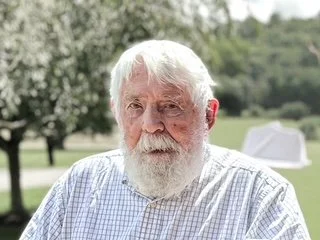
Eldon R. “Tope” Knauf
Wales, Wisconsin
Forestry & Forest Products Industry Leader
Eldon R. "Tope" Knauf is a lifelong forestry professional with deep family roots in the Pacific Northwest timber industry, holding a degree in Biological Forestry from UC Berkeley (1956) and extensive experience managing sawmills, timberlands, pulp mills, and teams of foresters through Fortune 500 companies Georgia-Pacific and Louisiana-Pacific. Now living in Wisconsin, he brings decades of practical expertise in forest products manufacturing and his conviction that creating market value for standing timber is essential to sound forest management
Biography
My name is Eldon R. Knauf. My nickname is "Tope" -- T-O-P-E -- and I have been involved in the forest industry all my life. There may be a question as to my qualifications. Private foresters have little exposure and don’t publish.
My first breath of life was air from the Camas [Washington] pulp mill. I was born two blocks north and my family was employed within that complex. My father spent 40 years employed in that company and successor companies, raising to the position of President of Crown Zellerbach Export Corporation.
Uncles and cousins involved in logging and forestry on the Colville Indian Reservation furthered my interest in the logging industry and forestry. Thus, my interest and my career in forestry and forest products manufacturing.
I received a degree in Biological Forestry from the University of California in 1956. In 1965 I became manager of a sawmill manufacturing housing studs in Willits, California. This led to employment in two Fortune 500 companies, Georgia-Pacific and the spinoff company Louisiana-Pacific -- with forest products experience through the west, which included timberland acreage, sawmills, pulp mills, and at one time my staff at one location included 61 foresters.
I'm presently living in Wisconsin amongst the hardwoods, having trouble in diagnosing what happened in these closed canopy hardwoods. Recognition of the necessity of manufacturing which creates a value for a standing tree was developed through appraisal and acquisition of sawmills throughout the west.
More Information
-
Watch here (5:58 minutes): https://youtu.be/8yPsGv2w0Ao?si=ory_ilHvBkHoy9Tu
Read .pdf Transcript